
Most people assume fitting a GPS tracker is a job for an auto electrician. For a hardwired tracker it usually isn't: if you're comfortable connecting a few wires behind a dash panel, it's closer to fitting a dashcam than rewiring a car. Most self-installs take 30 to 60 minutes, and no specialist tools are required.
Here's what's actually involved, so you can make an honest call about whether to do it yourself.
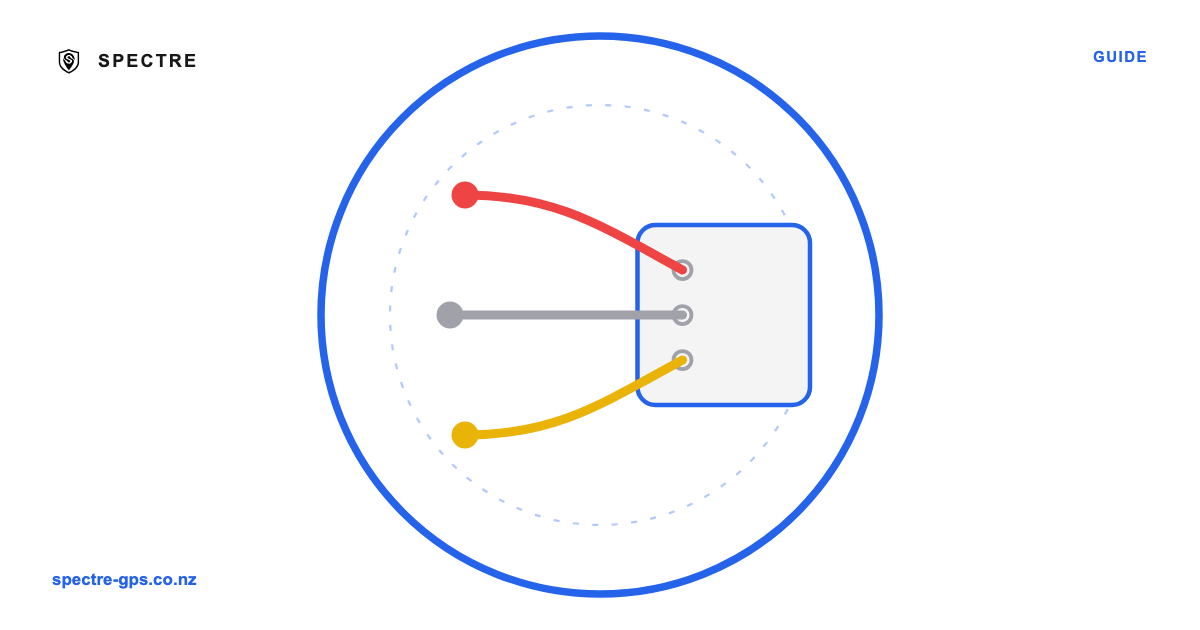
It comes down to three wires
A hardwired Spectre tracker needs:
Constant 12V power and ground. This is what keeps the tracker alive and reporting whether or not the vehicle is running.
A switched ignition wire. This is how the tracker knows the difference between "the engine is running" and "this thing is being towed or moved without the key."
Optionally, an output wire to a relay, this is what enables remote immobilisation and any custom outputs.
That third one is optional but worth doing at fit time rather than going back in later. It's the difference between a tracker that tells you where a stolen vehicle is and one that can stop it restarting.
What you'll want on hand
No specialist tools, but a soldering iron or good-quality crimps are strongly recommended over twist-and-tape joins. A tracker is only useful if it's still connected months or years later, and a lazy join in a vibrating vehicle is exactly the sort of thing that quietly fails right when you need it.
A full step-by-step wiring guide is included with every tracker, and the quick-start guide in the box covers the basics.
Where to hide it
This matters more than most people expect, and it's the part a professional installer earns their money on.
The goal is somewhere hidden from plain sight but with a reasonable view of the sky for GPS signal. Common locations are behind dash panels, under a seat, or in the boot near the fusebox. What you're avoiding is the obvious spot: anywhere a thief would think to check in the first thirty seconds.
Worth saying plainly: a hidden hardwired tracker has no visible antenna and no indicator light. Physically finding one means knowing where to look. That advantage is entirely down to where you put it, so it's worth spending an extra ten minutes on this decision.
Will it flatten the battery?
No. The tracker draws roughly 15–20mA in standby, less than a typical car alarm. On a vehicle that gets driven even occasionally, that's not a meaningful load.
For vehicles that sit for long stretches (a boat, a classic, a seasonal machine), battery-low and battery-disconnected alerts are included free, so you'll know if voltage drops below safe levels rather than finding out when it won't turn over.
When to just pay someone
Self-install genuinely suits most vehicles. Go professional if:
The vehicle is new or under warranty and you'd rather not touch the loom yourself
You want the immobiliser output wired in and you're not confident identifying the ignition circuit
It's a fleet fit-out and you want every vehicle done consistently
It's a non-standard setup: heavy plant, marine, or anything running 24V
We can connect you with a trusted local installer, and a professional fit also typically takes under an hour. The unit ends up properly hidden and correctly wired for that specific vehicle, which is the main thing you're paying for.
One thing worth doing either way
Whether you fit it yourself or have it done, ask your insurer whether they offer a discount for a tracked vehicle. Some New Zealand insurers do, and we can provide a certificate of installation on request. A tracker also strengthens any theft claim by giving an accurate timeline of what happened and when.
Ready to fit one
Every Spectre tracker is hardwired, ships with a wiring harness, mounting hardware, a quick-start guide, and a built-in LTE SIM, no separate data plan to sort out. NZ-built, NZ-hosted, no lock-in.
See trackers & pricing → or read the full installation guide and FAQ →